Machine-learning algorithms to identify key biosecurity practices and factors associated with breeding herds reporting PRRS outbreak
Abstract
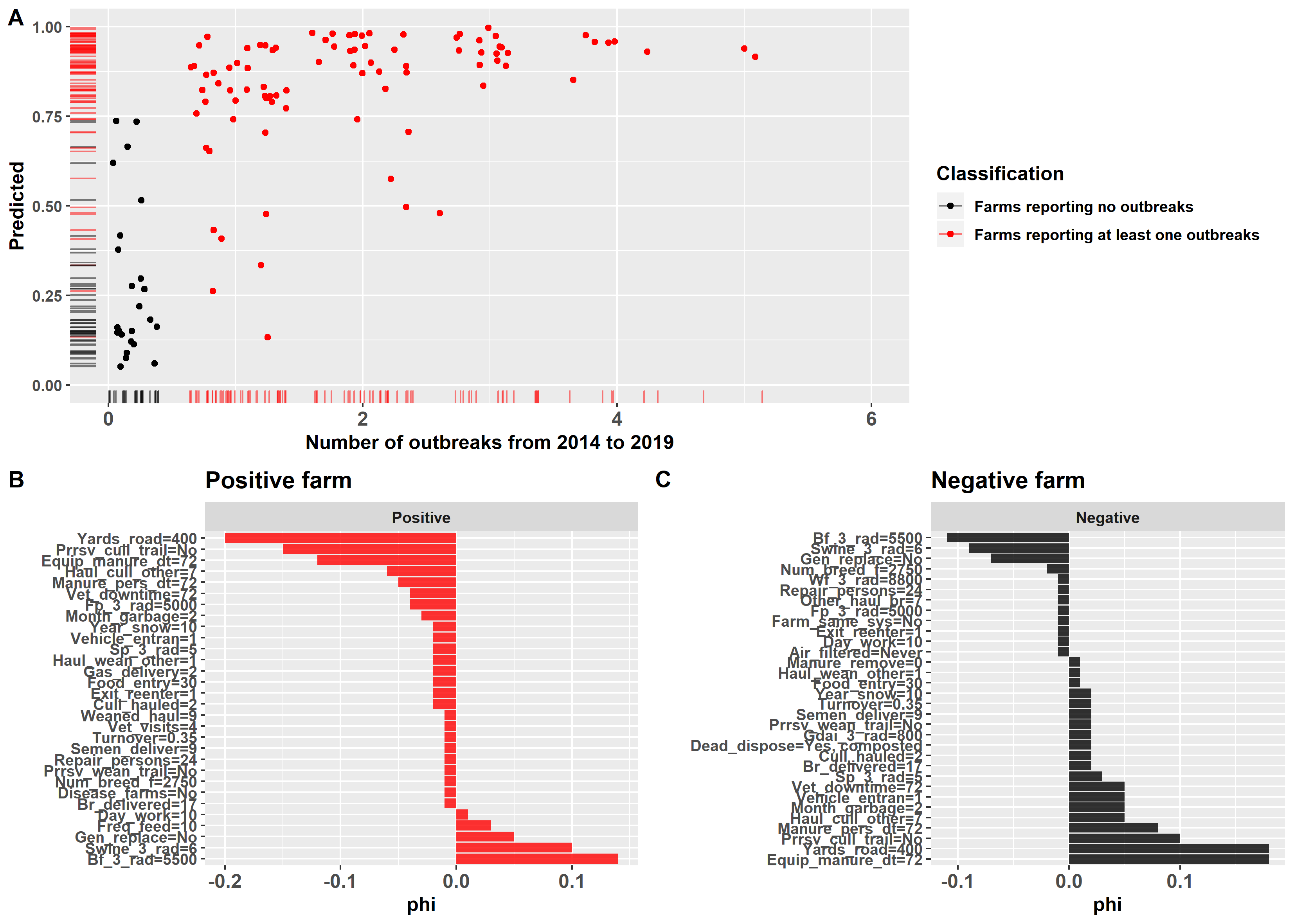
abstract: “Investments in biosecurity practices are made by producers to reduce the likelihood of introducing pathogens such as PRRSv. The objective of this study was to evaluate the use of machine-learning (ML) algorithms to identify key biosecurity practices and factors associated with breeding herds reporting a PRRS outbreak in the past 5 years. Data from 84 breeding herds U.S. from 14 production systems were used. Two methods were developed: method A identified 20 variables and accurately classified farms with an accuracy of 76%, while method B identified six variables and outperformed the former with an accuracy of 80%. Selected variables were related to the frequency of risk events on the farm, swine density, farm characteristics, and operational connections. Positive predictive values (PPVs) for both methods were highly correlated to the frequency of PRRSv outbreaks reported by the farms. This methodology has the potential to identify sites at relatively higher risk of PRRSv introduction to better manage the risk of pathogen introduction.”